MATERIALS
Thinner for strong prescriptions
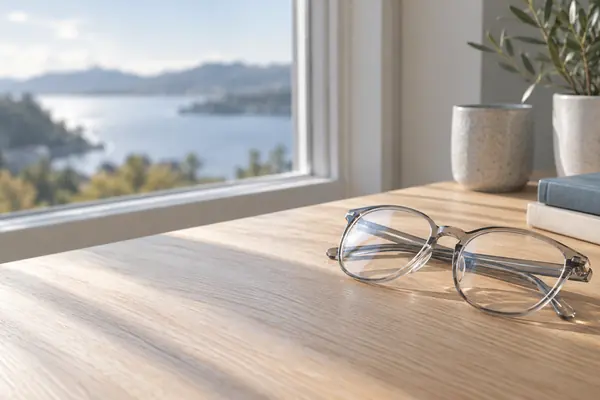
The College of Optometrists says high-index lenses are thinner than conventional ones, which matters most with a strong prescription. Aspheric designs are thinner and lighter too.
Match a feature visionweartech
THE TECH IN A PAIR OF GLASSES
A spectacle lens is more than a curved piece of plastic.
Most lenses today are lightweight plastic, often with thin coatings on top: one to cut reflections, one to resist scratches, sometimes a chemistry that darkens in sunlight. Here is what each layer does, and what it does not.
LAYERS you cannot see
Match a featureTHE SHORT ANSWER
Lens material decides thickness and toughness.
Coatings deal with reflections and scratches.
MATERIALS
The College of Optometrists says high-index lenses are thinner than conventional ones, which matters most with a strong prescription. Aspheric designs are thinner and lighter too.
Match a featureCOATINGS
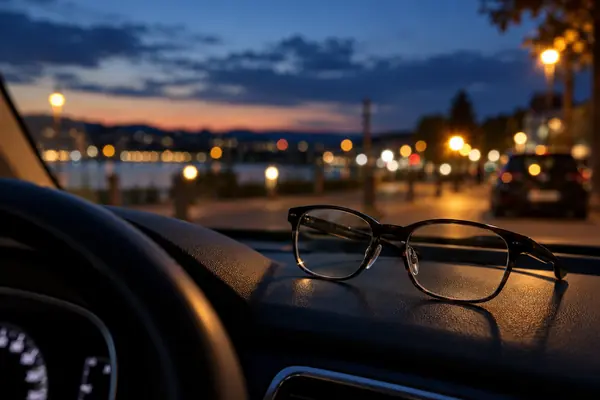
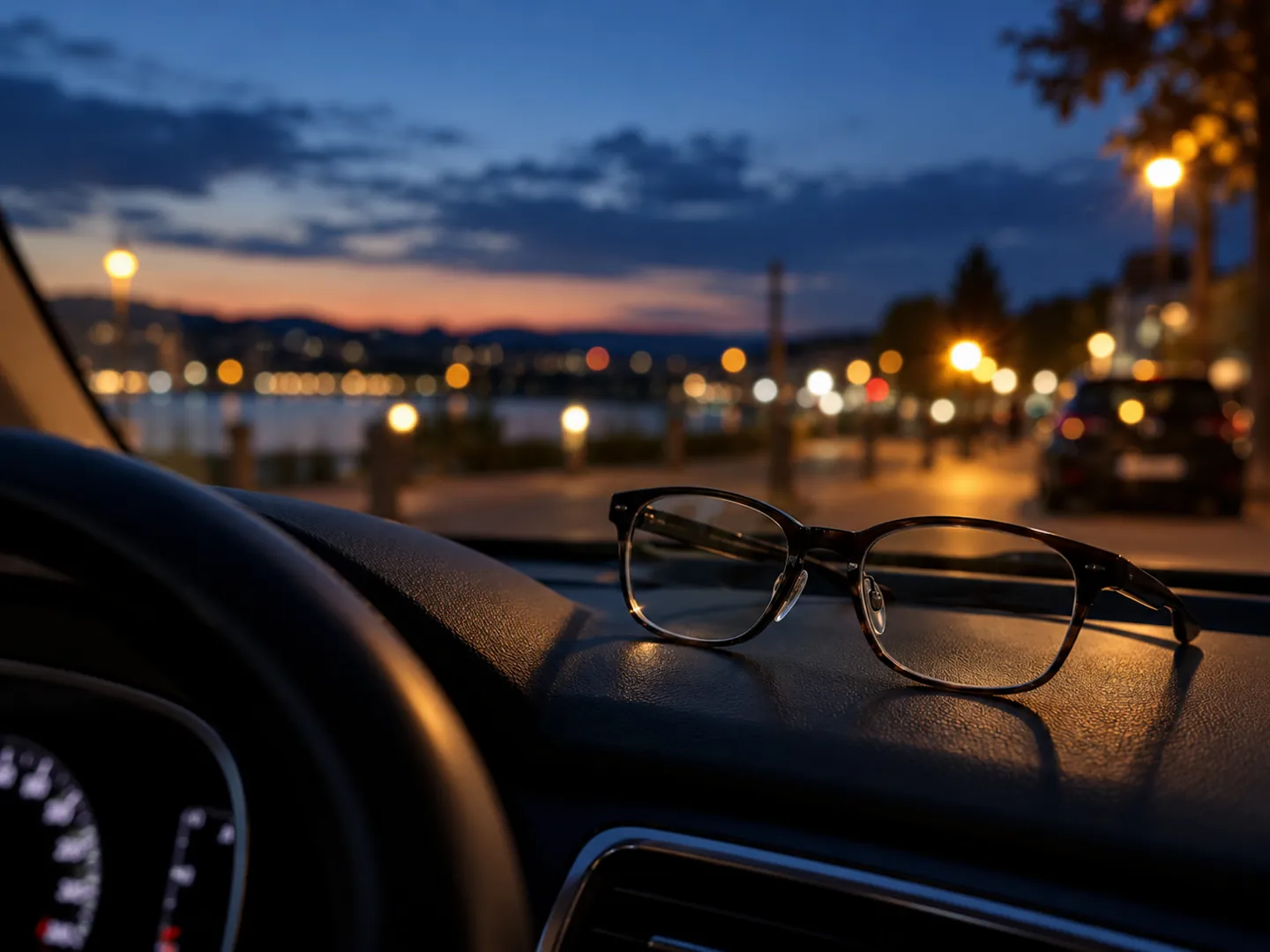
An uncoated glass surface reflects about 4% of light. Anti-reflection coatings cut this, which the College says helps most with computer work and night driving.
See the numbersPHOTOCHROMICS
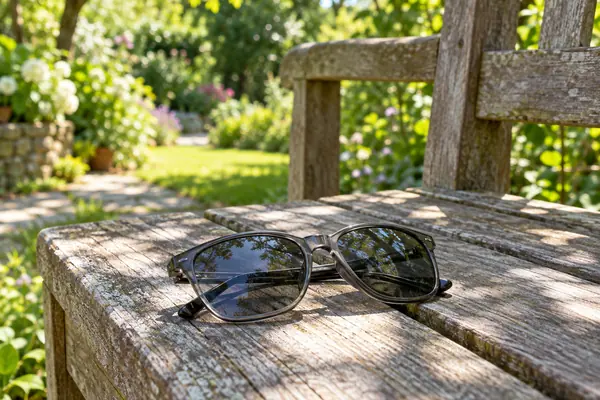
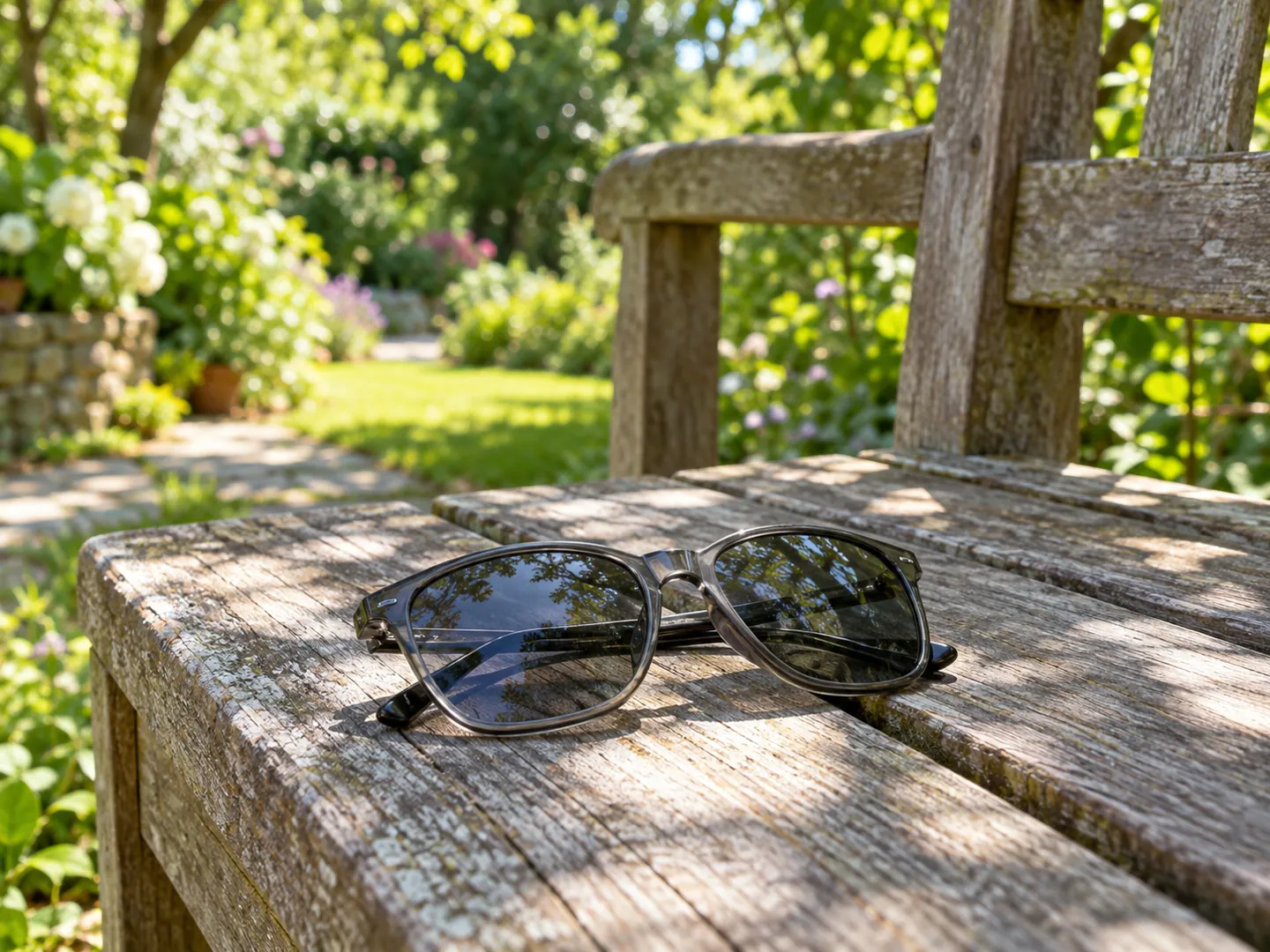
Photochromic lenses darken in ultraviolet light and clear again indoors. Behind a car windscreen they may not darken as much, because the glass absorbs most near-UV.
Living with themGeneral information only, not medical advice. For advice about your own health, speak to a doctor, pharmacist or other qualified health professional.
FOUR THINGS TO KNOW
Coatings are thin, and every lens type has a trade-off. These points come straight from optometry and lens-testing guidance.
A hard coat makes plastic lenses harder to scratch and longer-lasting, but the College is clear they are not scratch proof.
Some older photochromic materials degrade over time. If your lenses no longer go as clear as they used to, the College suggests a new pair.
Windscreens absorb most of the near-UV that darkens photochromic lenses, so they may stay lighter while you drive.
Ready-made readers are fine as spares, but the College recommends an eye examination at least every two years after 40, whatever glasses you wear.
TWO NUMBERS WORTH KNOWING
One figure on reflections from a bare surface,
one on how impact resistance is checked in the US.
≈ 4% per surface
Light reflected at each uncoated surface
Edmund Optics explains that about 4% of light is reflected at each air-glass interface of an uncoated substrate, leaving only about 92% of the light transmitted through both sides.
REFLECTION · OPTICS REFERENCE
50 inches
Drop height for the steel-ball test
US regulation 21 CFR 801.410 says eyeglass and sunglass lenses must withstand a 5⁄8-inch steel ball, about 0.56 ounce, dropped from 50 inches onto the lens without fracturing.
IMPACT TEST · US FDA RULE
The FDA's guidance adds that plastic lenses are not necessarily impact resistant just because they are made of plastic, and that re-edging or resurfacing a treated glass lens can significantly reduce its impact resistance.
A QUICK FEATURE MATCH
Pick a situation to see which lens feature the College of Optometrists links to it. The bar shows how directly the guidance ties that feature to the situation.
Based on the College of Optometrists' public guide to glasses. General information only: your optometrist can advise on your own prescription.
WHY COATINGS WORK
An anti-reflection coating is a film roughly a quarter of a wavelength of light thick. Light bounces off both the top and the bottom of the film, and the two reflections are timed to cancel each other out.
A single layer works best at one colour of light, so modern coatings stack several layers to cover more of the visible range. Edmund Optics describes a standard visible-light coating that reduces average reflection to 0.4%.
Questions
The College of Optometrists says they eliminate distracting reflections from lens surfaces and are particularly helpful for computer users and night driving. They also make the lenses look less noticeable and can help disguise thickness.
It describes a lens material that bends light more strongly, so the lens can be thinner for the same prescription. The College says this matters most for people with a strong prescription.
They darken mainly in ultraviolet light, and car windscreens and windows absorb most of the near-UV that triggers them. They may not get as dark in the car as outdoors.
No. The US FDA's guidance says plastic lenses are not necessarily impact resistant just because they are made of plastic. In the US, lenses must pass a drop-ball test set out in 21 CFR 801.410.
No. The College of Optometrists says scratch-resistant coatings protect against damage and prolong lens life, but are not scratch proof.
Updated
ABOUT THIS NAME
visionweartech.com is part of the DoodleSale portfolio. It isn't in an auction right now, but you can ask about leasing it.